#223 in Books > Literature & Fiction > Genre Fiction > Historical > Cultural Heritage
#1752 in Books > Literature & Fiction > Genre Fiction > Family Life
#4478 in Books > Literature & Fiction > Literary
More about the author
Arundhati Roy is the author of a number of books, including The God of Small Things, which won the Booker Prize in 1997 and has been translated into more than forty languages. She was born in 1959 in Shillong, India, and studied architecture in Delhi, where she now lives. She has also written several non-fiction books, including Field Notes on Democracy, Walking with the Comrades, Capitalism: A Ghost Story, The End of Imagination, and most recently Things That Can and Cannot Be Said, co-authored with John Cusack. Roy is the recipient of the 2002 Lannan Foundation Cultural Freedom Prize, the 2011 Norman Mailer Prize for Distinguished Writing, and the 2015 Ambedkar Sudar award.
Editorial Reviews
Amazon.com Review
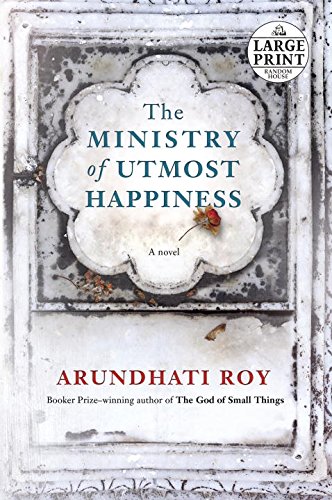
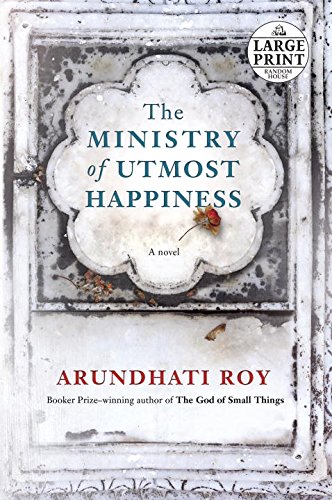
An Amazon Best Book of June 2017: To read The Ministry of Utmost Happiness is to immerse yourself in years of India’s religious, political, and cultural changes and to feel it all through the narrative of an incredible cast of characters. What becomes apparent throughout their individual stories is that power and belief are malleable, that suffering does not end but merely changes hands, and what is revered can easily become reviled. The latter shows up most clearly for Anjum, formerly Aftab, who becomes a famous Hijra in Delhi, only to later find herself keeper of a graveyard sanctum for others who are no longer welcome in the new society. Yes, there is a lot of violence and heartbreak in this novel, but Roy also suffuses it with humor, irony, and --more than anything-- the ability of love and acceptance to heal the broken. Even when, or perhaps,especially when, it comes from places one would never expect. The Ministry of Utmost Happiness is complex and compassionate, and the heart and soul that Arundhati Roy so obviously gave to it is worth every one of the many years it’s taken to give us another fictional masterpiece. --Seira Wilson, The Amazon Book Review
--This text refers to the Audio CD edition.
Review
“A fiercely unforgettable novel…a love story with characters so heartbreaking and compelling they sear themselves into the reader’s brain.” –Patty Rhule, USA TODAY
"Moving. . . powerful. . .The kind of book that makes you feel like you've lived several times over. [It] contains so much of everything: anguish and joy and love and war and death and life, so much of being human. Ministry rip[s] open the world to show us everything that is dazzlingly beautiful and brutally ugly about it...Roy centers the vulnerable and the unseen, making clear that love is the only way for individuals to really meet across the borders of skin or country. Everything is alive in Ministry, from emotions to people to the country itself. It is this aliveness of every human as well as every animal and thing that makes this novel so remarkable. Ministry is the ultimate love letter to the richness and complexity of India—and the world—in all its hurly-burly, glorious, and threatened heterogeneity. Roy is a treasure of India and of the world.” –Anita Felicelli, LA Review of Books
"A deeply rewarding work… Roy writes with unabashed beauty...Images in The Ministry of Utmost Happiness wedge themselves in the mind like memories of lived experience.” –Laura Miller, Slate
“Stirring. . . humane and impassioned . . . beautiful and rich. The novel has the feel of a yarn…Roy’s observations unspool as vivid and gimlet, whether she is describing personal catastrophe or national disasters…Brilliant writing—an ambitious story with a profound moral integrity and a deep emotional impact. ”–Kathleen Rooney, Chicago Tribune
“Epic in scope, sharply realized. . . an engaged story, with many threads, that blends tragedy and political outrage with a humane and hopeful vision of the future…The Ministry of Utmost Happiness place[s] Roy at the forefront of Indian literature.” –Gregory McNamee, Kirkus Reviews
“Dazzling. . . expansive, touching . . . a novel teeming with indelible characters. Roy shifts places, time periods, and viewpoints with the grace of a master choreographer…Ministry is a beautifully written, powerful story [that] spans a continent and several decades of war and peace and people who live in places and on the streets, as well as undercover and underground—a novel that’s worth the wait. Once again, Arundhati Roy has told a real story.” –Renee H. Shea, Poets & Writers (cover story)
*“Brilliant. . . well worth the wait. Roy looks unflinchingly at poverty, human cruelty, and the absurdities of modern war; somehow, she turns it into poetry. Highly recommended.” –Kate Gray, Library Journal, (starred review)
“Roy’s novel will be the unmissable literary read of the summer. With its insights into human nature, its memorable characters and its luscious prose, Ministry is well worth the wait.” –Sarah Begley, TIME
“Propulsive, playful . . . this new book finds Roy the artist prospering with stories, and writing in gorgeous, supple prose. Again and again beautiful images refresh our sense of the world. Sections of the book filled me with awe—not just as a reader, but as a novelist—for the sheer fidelity and beauty of detail—a terrific novelistic noticing. Roy writes with astonishing vividness.” –Karan Mahajan, The New York Times Book Review (cover review)
“Fearless . . . staggeringly beautiful—a fierce, fabulously disobedient novel . . . so fully realized it feels intimate, yet vibrates with the tragicomedy of myth . . . Roy is writing at the height of her powers. Once a decade, if we are lucky, a novel emerges from the cinder pit of living that asks the urgent question of our global era. Roy’s novel is this decade’s ecstatic and necessary answer.” –John Freeman, The Boston Globe
“Magisterial, vibrant . . . Roy’s second novel works its empathetic magic upon a breathtakingly broad slate—inviting us to stand with characters who refuse to be stigmatized or cast aside.” –Liesel Schillinger, O, The Oprah Magazine
“A gem—a great tempest of a novel: a remarkable creation, a story both intimate and international . . . Here is writing that swirls so hypnotically it doesn’t feel like words on paper so much as ink on water. This vast novel will leave you awed by the heat of its anger and the depth of its compassion.” —Ron Charles, The Washington Post
“Compelling . . . musical and beautifully orchestrated. Roy’s depiction of furtive romance has a cinematic quality, as well as genuine poignancy and depth of emotion. Her gift is for the personal: for poetic description [and an] ability to map the complicated arithmetic of love and belonging . . . Ministry manages to extract hope from tragedies witnessed.” –Michiko Kakutani, The New York Times
“Powerful and moving . . . reminds us what fiction can do. Roy’s exquisite prose is [a] rare instrument. She captures the horrors of headlines, and the quiet moments when lovers share poems and dreams. Ministry is infused with so much passion that it vibrates. It may leave you shaking, too. Roy’s is a world in which love and hope sprout against all odds, like flowers pushing through cracked pavement." –Heller McAlpin, San Francisco Chronicle
"Glorious . . . remarkable, colorful and compelling . . . Roy has a passionate following, and her admirers will not be disappointed. This ambitious new novel, like its predecessor, addresses weighty themes in an intermittently playful narrative voice. You will [be] granted a powerful sense of the complexity, energy and diversity of contemporary India, in which darkness and exuberant vitality and inextricable intertwined.” —Claire Messud, The Financial Times
“A lustrously braided and populated tale woven with ribbons of identity, love, mourning, and joy—and tied together with yellow mangoes, cigarettes, and damask roses.” —Sloane Crosley, Vanity Fair
“Gorgeously wrought.” –Entertainment Weekly, “Summer’s 20 Must-Read Books”
“If you want to know the world behind out corporate-sponsored dreamscapes, you read writers like Arundhati Roy. She shows you what’s really going on.” —Junot Diaz, in Vogue
“Ministry is the follow-up we’ve been longing for—a poetic, densely populated contemporary novel in the tradition of Dickens and Tolstoy. From its beginning, one is swept up in the story. If The God of Small Things was a lushly imagined, intimate family novel slashed through with politics, Ministry encompasses wildly different economic, religious, and cultural realms across the Indian subcontinent and as far away as Iraq and California. Animating it is a kaleidoscopic variety of bohemians, revolutionaries, and lovers…With her exquisite and dynamic storytelling, Roy balances scenes of suffering and corruption with flashes of humor, giddiness, and even transcendence.” —Daphne Beal, Vogue
“Affecting . . . A rangy and roving novel of multiple voices; an intimate picture of a diverse cast of characters…We see in detail not only their everyday lives but also their beliefs, and the contexts that inform their actions…Tilo is the book’s beating heart, a beautiful and rebellious woman and a magical focal point toward which all desire in the novel flows. Roy’s instinct for satire is as sharp as ever, and her stories build to a broader portrait of India over the past few decades. Roy’s sentences are marked by an eloquence even as they string together various ideas and elements. Her prose is in this sense radically democratic. And her unmistakable style and her way of seeing the world become something larger, too.” —Amitava Kumar, BookForum
“Roy returns to fiction with tales that span from the mourned in a graveyard to the beating hearts of the people of Delhi, masterfully conveying the wide-ranging perseverance of the human soul.” —Steph Opitz, Marie Claire
“It’s finally here! Fans of The God of Small Things have been waiting for Roy’s next novel, and it doesn’t disappoint. The Ministry of Utmost Happiness is big, both in physical heft and in ideas. It features an unforgettable cast of characters from across India whose stories are told with generosity and compassion. The novel’s greatest feat is showing the ways in which religious belief, gender identity, and even our safety in the world, are not fixed—they have as much fluidity as Roy’s astute plotting.” —Maris Kreizman, Vulture Summer Books Preview
“Stunning— a feat of storytelling . . . Roy’s lyrical sentences, and the ferocity of her narrative, are a wonder to behold. The Ministry of Utmost Happiness [is] a celebration.” —Zak M. Salih, Richmond Times-Dispatch
“The first novel in 20 years from Roy, and worth the wait: a humane, engaged near fairy tale that soon turns dark—full of characters and their meetings, accidental and orchestrated alike to find, yes, that utmost happiness of which the title speaks.” —Kirkus (starred review)
“Ambitious, original, and haunting . . . a novel [that] fuses tenderness and brutality, mythic resonance and the stuff of headlines . . .essential to Roy’s vision of a bewilderingly beautiful, contradictory, and broken world.” —Publishers Weekly (starred review)
“A masterpiece . . . Roy joins Dickens, Naipaul, García Márquez, and Rushdie in her abiding compassion, storytelling magic, and piquant wit…. A tale of suffering, sacrifice and transcendence—an entrancing, imaginative, and wrenching epic.” –Donna Seaman, Booklist (starred review)
“To say this book is ‘highly anticipated’ is a bit of an understatement. The Ministry of Utmost Happiness will be a welcome gift for those who’ve missed Roy’s dazzling fiction.” —Eliza Thompson, Cosmopolitan, “11 Books You Won’t Be Able to Put Down This Summer”
“Her new novel is larger, more complicated, more multilingual, more challenging as a reading experience than The God of Small Things, and no less immersing. This intricately layered and passionate novel, studded with jokes and with horrors, has room for satire and romance, for rage and politics and for steely understatement. A work of extraordinary intricacy and grace.” —Gillian Beer, The Prospect (UK)
“As she did in “The God of Small Things,” Roy astutely unpacks the layers of politics and privilege inherent in caste, religion and gender identity. Her luminous passages span eras and regions of the Indian subcontinent and artfully weave the stories of several characters into a triumphant symphony, where strangers become friends, friends become family, and the disenfranchised find the strength to wrestle control of their own narratives.” —Minneapolis Star Tribune
“This is the novel one hoped Arundhati Roy would write about India. Satirical yet compassionate, it channels the spirit of the transgressive-mystical in subcontinental poetry rarely found in Indian-English writing.” —The Telegraph
“This book, only second from Roy's stable in the last twenty years, retains the metaphorical music that she used to fair rapture in her first book. The descriptions, spring to live with her subtle touch, and she, almost, looks to have done that effortlessly.” —Times of India
Customer Reviews
5.0 star
The Coming Together of The Outcasts
ByUmar Tosheebon June 10, 2017|Verified Purchase
This novel is about the marginalized people in modern India--people living on the periphery--the transgenders, Dalits (untouchables), Muslims, Kashmiris, people not included in the rising capitalist India. Aftab, who later changes his name to Anjum, is born to Muslim family in old Delhi. His mother notices that there is something not quite right with him, he has both the male and female body parts. Despite family’s best effort Anjum moves out of the house and starts living with other transgenders, called Hijras in Urdu-Hindi.
There is a lot of symbolism in the novel how Anjum as a Hijra and as a Muslim is treated by the society at large, and how she perceives herself. Who is she, what is she, and maybe why? In most countries, including India, people have struggled to deal with transgenders. In this novel, Arundhati Roy, tries to show that it is not just transgenders, there are many different types of people who have uncertain role and relation with modern India. Muslim in general but especially muslims in Kashmir are one of those people.The novel describes the riots in Gujarat, and the violence in Kashmir. Musa, a Kashmiri, who is going to college in Delhi, due to a tragedy, in which his wife and daughter are killed, turns to extremism and becomes a Kashmiri separatist.
The Chamars, Dalits, or Untouchables are another example of historic outcastes in the society like transgenders. Saddam Hussein, not his real name, who belongs to Dalit caste, is attacked with his father by Hindu extremists, and his father is murdered. There is similar pattern when it comes to his predicament, like Anjum a Hijra, Musa a Kashmiri Muslim, modern India does not quite know how to deal with him.
Tilo is another such person, from South India, born out of wedlock, she is searching for destiny. Musa and her have close relationship, she even helps him out with insurgency in Kashmir. All these outcastes eventually start living in a graveyard together. It is in this graveyard, all of them rejected and scarred by the society, come together, share each other’s pain, and find some peace and sense of community.
It is a beautifully written novel. It gives this hope that despite shortcomings of India democracy, there is room for protests and debate. All different kinds of protesters who gather at the Jantar Mantar is one example of that. Muslims, Dalits, Hijras, gas leak victims from Bhopal, Earthquake victims, and many other kind of protesters, they all gather there, with hope that they will be heard. Maybe a time will come when they will be.
2.0 star
Don't expect a cohesive plot, just relish the characters and settings
ByJulia Flyteon June 1, 2017
I expected to love this book. I loved “God of Small Things” and several of my all-time favourite books are by Indian authors. So after approaching it full of anticipation and expectations, it pains me to say that I found it almost unreadable. Which is feel sure is more about me and my failure as a literary reader. But I did not “get” it.
The book is about a disjointed trio on the margins of society, people who have no people, who come together and make a new home in a Delhi graveyard. Anjum is a hermaphrodite who considers herself a “counterfeit woman” and who longs to be a mother. Saddam Hussein hero-worships the dictator Saddam Hussein and has renamed himself in his honor. And Tilo’s great love is a Kashmiri terrorist.
It’s an extremely disjointed novel, more like a collection of barely related stories that move backwards and forwards in time, which gradually weave themselves together to allow you to spot the common threads. Along the way we are introduced to dozens of characters and for almost every one we will be given their back story in detail, whether it is relevant or not. There is a lot of telling us “what happened” and not a lot of dialogue.
Essentially this is a book without a plot and if you realise that going in, you’ll probably struggle less with it than I did. The writing is lovely: scenes are described in such a way that you’re there, you see what the characters are seeing. Even characters who make only a brief appearance are brought vividly to life. The instability in Kashmir and its effect on the people who live there is chillingly portrayed – when an ear infection means you could get shot because you can’t hear the instructions from the checkpoints.
I finished it and I feel a sense of accomplishment for doing so, but would I recommend it? No not really.
5.0 star
Wow! a delicious read -- did not want it to end
Bykn_son June 25, 2017|Verified Purchase
I loved the book but it took Tillottama's story to make it a little bit closer to the heart. -- the first half is compelling, but she does not really get under Anjum's skin or the others either the way she does with Tilo. guess she needs to live it to get us to feel it? Someone had compared to Rohinton Mistry and said she was lacking, but they miss the point -- I cannot for the life of me ever pick up a Mistry book for a re-read. Sure, he brings his characters to life the way no one else can, but the unrelenting misery with no hope in sight is not real either. She captures in a very real way the essence of India, the resilience of life and how it goes on and how people find hope and living happiness in unimaginable circumstances. I would only have said, skip the political diatribes, but knowing that is closer to her heart, and agreeing with every one of her observations, I cannot dock a star for the way those asides interfere with the narrative. If you liked the movie Slumdog Millionaire, you will enjoy this book.
1.0 star
A kaleidoscope
BySushIIon June 26, 2017|Verified Purchase
I tried to read this book, and failed. Whatever plot there may be is hard to detect in the expluteration of descriptions, asides, excursions, political situations, extraneous commentary, and chaos that the author describes. I got through the part about Argnun, the hermaphrodite, and started the part about the second protagonist. Failing to see the significance of these two narratives in the mishmash, I gave up. Does the author have ADD by any chance?
5.0 star
Ravishing
ByD. Notoon June 17, 2017|Verified Purchase
Having spent 20 years waiting for this second novel, it's everything I could want. Roy creates a harrowing world filled with terrible darkness and overwhelming beauty. There are a LOT of secondary characters to keep track of, but they add to the tapestry. It's sensational.