#4 in Books > Mystery, Thriller & Suspense > Thrillers & Suspense > Legal
#9 in Books > Literature & Fiction > Classics
More about the author
Harper Lee was born in 1926 in Monroeville, Alabama. She is the author of the acclaimed novels To Kill a Mockingbird and Go Set a Watchman, and was awarded the Pulitzer Prize, the Presidential Medal of Freedom, and numerous other literary awards and honors. She died on February 19, 2016.
Editorial Reviews
Amazon.com Review
"When he was nearly thirteen, my brother Jem got his arm badly broken at the elbow.... When enough years had gone by to enable us to look back on them, we sometimes discussed the events leading to his accident. I maintain that the Ewells started it all, but Jem, who was four years my senior, said it started long before that. He said it began the summer Dill came to us, when Dill first gave us the idea of making Boo Radley come out."
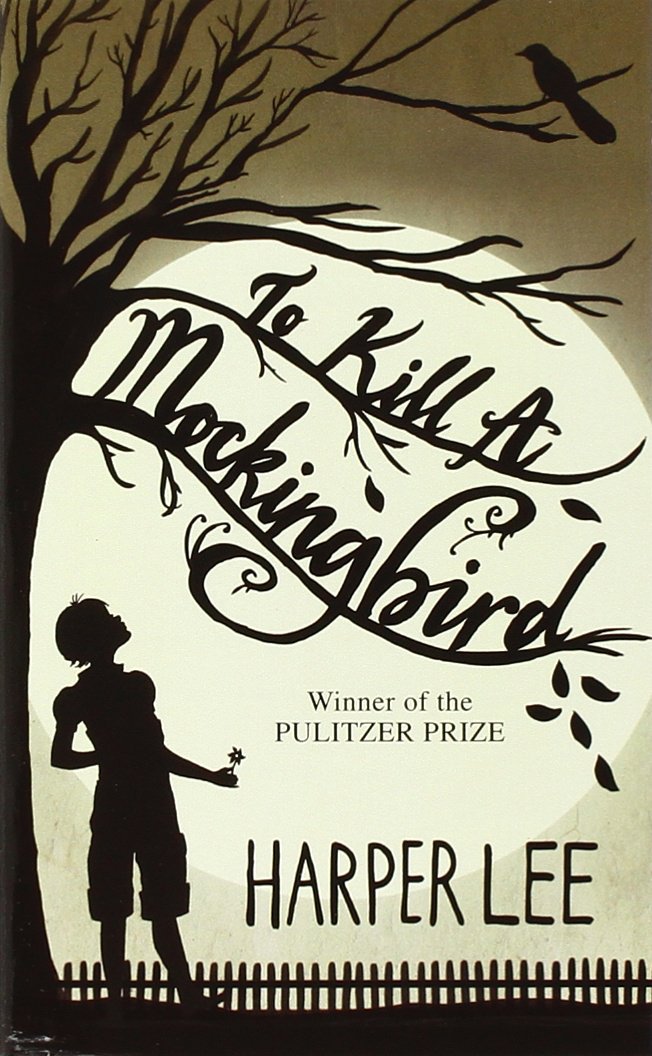
Set in the small Southern town of Maycomb, Alabama, during the Depression, To Kill a Mockingbird follows three years in the life of 8-year-old Scout Finch, her brother, Jem, and their father, Atticus--three years punctuated by the arrest and eventual trial of a young black man accused of raping a white woman. Though her story explores big themes, Harper Lee chooses to tell it through the eyes of a child. The result is a tough and tender novel of race, class, justice, and the pain of growing up.
Like the slow-moving occupants of her fictional town, Lee takes her time getting to the heart of her tale; we first meet the Finches the summer before Scout's first year at school. She, her brother, and Dill Harris, a boy who spends the summers with his aunt in Maycomb, while away the hours reenacting scenes from Dracula and plotting ways to get a peek at the town bogeyman, Boo Radley. At first the circumstances surrounding the alleged rape of Mayella Ewell, the daughter of a drunk and violent white farmer, barely penetrate the children's consciousness. Then Atticus is called on to defend the accused, Tom Robinson, and soon Scout and Jem find themselves caught up in events beyond their understanding. During the trial, the town exhibits its ugly side, but Lee offers plenty of counterbalance as well--in the struggle of an elderly woman to overcome her morphine habit before she dies; in the heroism of Atticus Finch, standing up for what he knows is right; and finally in Scout's hard-won understanding that most people are essentially kind "when you really see them." By turns funny, wise, and heartbreaking, To Kill a Mockingbird is one classic that continues to speak to new generations, and deserves to be reread often. --Alix Wilber
From Publishers Weekly
Starred Review. Lee's beloved American classics makes its belated debut on audio (after briefly being available in the 1990s for the blind and libraries through Books on Tape) with the kind of classy packaging that may spoil listeners for all other audiobooks. The two CD slipcases housing the 11 discs not only feature art mirroring Mary Schuck's cover design but also offers helpful track listings for each disk. Many viewers of the 1962 movie adaptation believe that Lee was the film's narrator, but it was actually an unbilled Kim Stanley who read a mere six passages and left an indelible impression. Competing with Stanley's memory, Spacek forges her own path to a victorious reading. Spacek reads with a slight Southern lilt and quiet authority. Told entirely from the perspective of young Scout Finch, there's no need for Spacek to create individual voices for various characters but she still invests them all with emotion. Lee's Pulitzer Prize–winning 1960 novel, which quietly stands as one of the most powerful statements of the Civil Rights movement, has been superbly brought to audio. Available as a Perennial paperback. (Aug.)
Copyright © Reed Business Information, a division of Reed Elsevier Inc. All rights reserved.
--This text refers to an out of print or unavailable edition of this title.
Customer Reviews
5.0 star
Read this book before you die.
ByTammyon February 2, 2016|Verified Purchase
My first time reading this book at 43 years of age, just finished but moments ago, the character voices remain still, lingering in my thoughts and my consciousness as I write this review. And all I can say is...I get it. Now I know why I have heard about this book my entire life. Now I know why it is a classic. I could give you a long, overly-intellectualized review so that you imagine me sitting in a coffee house with a cool name like "Mad Goat" with a soy drink in one hand waxing poetic about the deep, social commentary of the time outlined so brilliantly in these pages in such a profound, simple way and how ironic it is that we still relate all these so many years later...but instead, I get it. I just...SO...get it. Read it.
4.0 star
Undisputed classic
ByFrank Sotoon May 10, 2017|Verified Purchase
‘You never really understand a person until you consider things from his point of view... Until you climb inside of his skin and walk around in it.’
Harper Lee’s To Kill A Mockingbird is an undisputed classic that few will avoid having read in their lifetime, and those few are to be pitied. As I habe presentation of the novel coming up this weekend, a discussion group that I am lucky enough to be allowed to lead as part of the The Big Read here in Holland, Michigan, I felt it necessary to revisit this timeless classic (and I figured I’d review it to help collect my thoughts on the subject). The experience was like returning to a childhood home and finding it warm and welcoming and undisturbed from the passage of time, like walking the streets of my old neighborhood and hearing the calls of friends as they rode out with their bikes to greet me, of knowing the mailman by name and knowing where all the best places for hide-and-seek were, the best trees to climb, and feeling safe and secure in a place that is forever a part of yourself. Though some of the mechanics of the novel seemed less astonishing than my first visit more than a decade ago, the power and glory was still there, and I found a renewed love and respect for characters like Atticus, whom I’ve always kept close to heart when wrestling with my own position as a father. Harper Lee created a wonderful work that incorporated a wide range of potent themes, wrapping class systems, gender roles, Southern manners and taboos, and an important moral message of kindness, love and conviction all within a whimsical bildungsroman that no reader who has been graced by its pages will ever forget.
‘The one thing that doesn't abide by majority rule is a person's conscience.’
Before dipping into the novel itself, I’d like to take a moment to speak about Atticus Finch, one of my favorite characters in all of Literature. Atticus is a pillar of morality, a man of honor, integrity, and most importantly, conviction. He is humble and honest, even admitting to his children that yes, indeed they are poor. In a novel about society, with its tumultuous mess of morals and class, Atticus is like an authorial deus ex machina, being Lee’s method of inserting moralizing and an example of what constitutes a ‘good man’ into the book through character and not authorial asides. I’ve always idolized Atticus and tried to think ‘what would Atticus do?’ when it come to being a father and undertaking difficult moral conundrums (I even named my second cat Catticus Finch). Atticus takes the unpopular position of defending a black man in a rape case when assigned to him despite the town nearly ostracizing him. Atticus does his duty, and does it well, as a man of conviction that believes in doing what is right and honorable regardless of the consequences, living up to his statement that ‘Real courage is when you know you're licked before you begin, but you begin anyway and see it through no matter what’. In fact, Lee originally intended to name the novel Atticus before deciding it would stifle the broad perspective of Macomb by drawing too much attention to one character. Atticus remains steadfast throughout the novel, sure of himself and fully developed, whereas those around him undergo more a sense of change and development. This is a novel about personal growth and a broader understanding of those around you, and Atticus is the anchor to integrity and morality keeping his children centered in the violent storm of emotions and violence that befalls Macomb.
‘When a child asks you something, answer him, for goodness sake. But don't make a production of it. Children are children, but they can spot an evasion faster than adults, and evasion simply muddles 'em.’
There is a childlike innocence spun through a novel of such weight and seriousness, executed brilliantly by Lee’s choice of Scout as the narrator. We are forever seeing a larger world through the eyes of a young girl still trying to find her place in it while making sense of all the hustle and bustle around her, and this creates an incredible ironic effect where there are large events going on that the reader understands but are delivered nearly through defamiliarization because the narrator cannot fully grasp them¹. The narration allows Lee to balance the coming-of-age hallmarks with the weightier themes, allowing the reader to maintain an innocence from the rape and racism while still able to make sense of the society functioning at large, and retreating from the darker themes into the fun of the children’s comings and goings. What is most impressive is how everything blends together, and the lessons learned in each aspect of their life are applied to all the other elements they come in contact with. The fates of Tom and Boo Radley are emotionally and morally linked in the readers mind, heart and soul.
All the standard bildungsroman motifs that make people love the genre are present in To Kill a Mockingbird, from schoolyard quarrels, to learning your place in society. We see Scout, Jem, and even Dill, gain a greater understanding of the world and their place in it, watch the children come to respect their father for more than just being a good father, see them make dares, terrorize the neighbors in good fun, and even stop a mob before it turns violent. With Scout, particularly, there is an element of gender identity at play that leads into a larger discussion about class and society. Children learn from those around them, and Scout spends much of the novel assessing those around her, perhaps subconsciously looking for a role model for herself. The ideas of what a good southern woman is and should be are imposed upon her throughout the town, such as Ms Dubose who criticizes her manner of dress, or Aunt Alexandra and her attempts to eradicate Scout’s tomboyish behavior, and she learns to dislike Miss Stephanie and her gossipy behavior. Miss Maudie, however, curbs gossip and insults, and puts on the face of a southern lady, but still gets down into the dirt in the garden and behaves in other, more boyish, ways that Scout identifies with. The gender identification becomes a cog in the gear of Southern tradition in manners and class. While the court case is unquestionably controversial due to the racial implications, it is also because it forces people to discuss rape and involves questioning the Word of a woman. It forces up a lot of taboo that the community is uncomfortable in being forced to deal with it, and many inevitably turn a squeamish blind eye when forced to confront the ugly truths at hand. Macomb is a society where everything and everyone has their place, a set identification, and they do not like it being disturbed. Most important to note is the correlation that the characters who are most inclined to uphold societal traditions through self-righteous brow-beatings often exhibit the most rampant racism throughout the novel.
‘Mockingbirds don’t do one thing except make music for us to enjoy. They don’t eat up people’s gardens, don’t nest in corn cribs, they don’t do one thing but sing their hearts out for us. That’s why it’s a sin to kill a mockingbird.’
There are many ‘mockingbird’ characters in this novel, such as Tom and Boo, but the real mockingbird is, to me at least, the innocence that is lost. The town is forced to see each other for who they really are, to question their beliefs, to grow up with all the racism and bigotry going on around them. Atticus teaches Scout that we cannot know someone until ‘you consider things from his point of view’, and through the novel we see many misjudgements of character based on misunderstanding or characters refusing to see beyond their closed opinions, or even something as simple as Scout and Jem believing the rumors of Boo Radley as a bloodthirsty maniac. ‘People generally see what they look for, and hear what they listen for.’ This applies to many obdurate aspects of society, such as Miss Maudie stating ‘sometimes the Bible in hand of one man is worse than a whiskey bottle in the hand of-oh, your father,’ emphasizing the ways that a closed mind is just as dangerous as a violent hand and that even religion can be misused. There is a message of love, of looking into the hearts of others and not just judging them, a message of compassion and open-mindedness working through To Kill a Mockingbird, and it is a message that we all must be reminded of from time to time.
There are a few issues that arose on a re-reading of the novel, having grown myself as a reader since I first encountered this lovely book. While the moral lessons are important and timeless, there is a sense of heavy-handedness to their delivery. Particularly at the end when Sheriff Tate points out the dangers of making a hero of Boo Radley.
taking the one man who’s done you and this town a great service an’ draggin’ him with his shy ways into the limelight—to me, that’s a sin. It’s a sin and I’m not about to have it on my head.
This statement is quickly followed by Scout mentioning to Atticus that ‘Well, it’d be sort of like shootin’ a mockingbird, wouldn’t it?’. It seems a bit unnecessary to reiterate the point, especially when Tate’s double use of sin was enough to draw a parallel to the message earlier in the novel that it is a sin to kill a mockingbird. This, I admit, is overly nitpicky but brings up a conversation about teaching this novel in schools. This book is, ideally, read at a time of the readers own coming-of-age and the connections they are sure to draw with the characters reinforce the love for the novel. It is also a time in life when you are just beginning to understand the greater worlds of literature, and overtly pointing out themes is more necessary for readers when they haven’t yet learned how to look for them properly. It is books such as this that teach us about books, and usher us into a world of reading between the lines that we hadn’t known was there before. Another quiet complaint I have with the novel that, despite the themes of racism, Calpurnia seems to be a bit of an Uncle Tom character. However, who wouldn’t want to be in service for as great of a man as Atticus, so this too can be overlooked.
To Kill a Mockingbird is a novel surely deserving of it’s classic status. Though it is not without its flaws, there is a timeless message of love that permeates through the novel. It is also of great importance as a book that young readers can use as a ladder towards higher literature than they had been previously exposed to. Lee has such a fluid prose that makes for excellent storytelling, especially through the coming-of-age narrative of Scout, and has a knack for creating exquisite characters that have left their immortal mark in the halls of Literature as well as the hearts of her readers.
4.5/5
‘...when they finally saw him, why he hadn’t done any of those things...Atticus, he was real nice.
Most people are, Scout, when you finally see them.’
¹This style is reminiscent of William Faulkner, such as the court scene in Barn Burning from the detached perspective of a child. In fact, much of this novel feels indebted to Faulkner and the works of Southern Gothic authors before her, and the Tom incident and case feels familiar to those familiar with Faulkner’s Dry September or Intruder in the Dust. The way the most self-righteous and self-professed 'holy' also tend to be the basest of character morals is reminiscent of Flannery O'Connor as well. Lee’s story is fully her own, but it is always interesting to see the travels and growth of literary tradition.
5.0 star
Whatever -- Everyone knows To Kill a Mockingbird is a pretty good book
ByKristopheron March 27, 2017|Verified Purchase
why does amazon have me pick whether or not the plot is surprising to make any kind of review, even a star-only one. . .wtf? How is "Predictable, Some twists, or Full of surprises" a description of the plot? It doesn't even apply to a lot of the books I read. The hell man? This is only a question you ask of mystery or suspense novels.
Whatever -- Everyone knows To Kill a Mockingbird is a pretty good book. Even if people now think of Atticus as a racist -- which he is a bit, but only in the same way even the civil rights heroes before Dr. King were. Just because Huck Finn is pretty damn racist today, doesn't mean Twain wasn't a progressive. . it's just relative. You wanna talk about racism -- how the hell does anyone justify literally anything written by Lovecraft? His great idea of horror is almost always 'Mongrel' magic. Yet people insist he invented science fiction. . .*shudders*
5.0 star
Great author, Great story, Great gift.
ByGeorge E. Coleon June 6, 2015Verified Purchase
This was a gift for my 93 year old mother, she really is enjoying it, especially the large print.
5.0 star
bad packaging
ByJo Muncyon July 23, 2015|Verified Purchase
The package was crushed. Book was ok
5.0 star
Better 50 years later
ByDavid Alan Armstrongon May 12, 2017|Verified Purchase
I read it in high school as an assignment and missed the voice while struggling with the plot. I wanted it plain back then. What I got the second time, fifty years later, was a voice of innocence and wonder and wisdom in a story that was far more than plot. I missed Scout and Jem the first time because I was so worried about Boo and Tom. I missed the birthing of civil rights because all I could see was a trial. Harper Lee may have had only one good story in her, but I'm grateful she told it perfectly.